Personal profile / introduction
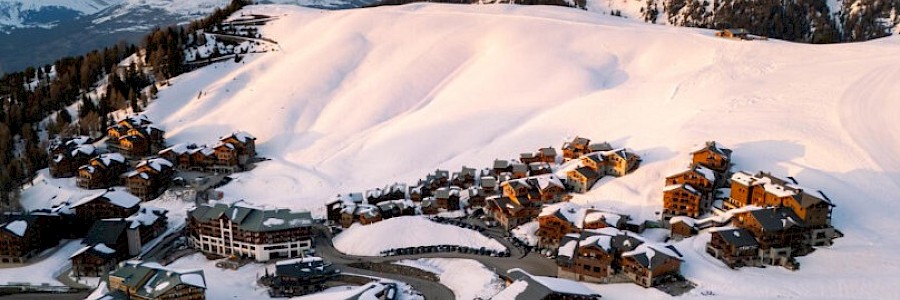
The allegory of the matryoshka dolls perfectly illustrates what La Plagne has to offer.
Here’s the proof in four points:
A wide range of personalities
A seemingly simple object: a large doll, which conceals a multitude of others, provided you take the time to open them. Unity in diversity! La Plagne is far more intimate than it first appears.
A palimpsest*
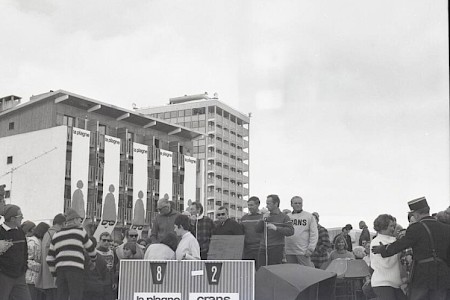
Skiing is by no means the beginning of the story! The town’s heritage bears witness to this, with its various elements fitting together seamlessly without ever erasing the past: Aime, the capital of Ancient Rome; the medieval Château de Montmayeur; the Romanesque basilica, over a thousand years old; the silver-lead mines of the 1950s; the 1992 Olympic Games… Every era has left a visible mark.
*Literally, an ancient manuscript on which the original text has been erased to write a new text over it. Figuratively, the term ‘palimpsest’ is also used to describe a place, a work or a landscape that retains visible traces of its earlier layers, even if they have been transformed.
Family-friendly
Since its launch in 1961, the Bonnet Rouge has built up a large and loyal following, with a significant proportion of owners and regular customers (47 per cent!). They demonstrate a strong attachment to the destination, which is passed down from generation to generation. These dolls embody the spirit of togetherness and the value of the bonds that unite us.
Universal and popular
Much like the endearing and iconic nesting dolls, La Plagne forms part of the collective imagination of skiing in France and abroad; for its loyal holidaymakers, the destination is linked to their own inner child. In its own way, it is a Proustian ‘Madeleine’, bringing back memories of learning to ski on its slopes, or of that first family fondue. At its heart, La Plagne is an accessible destination for everyone.